


The Costa Blanca is located on the eastern coast of mainland Spain. To the south, the region borders the Costa Cálida, then the Costa Almeria, and to the north, the Costa del Azahar. The coast borders the Mediterranean Sea. Below, we'll give you a brief overview of this Costa!
The Costa Blanca
The Costa Blanca can be divided into two parts, North and South, with the dividing line located near the city of Alicante. The southern part of the province is characterized by its beautiful, expansive sandy beaches and smaller coves, the warmest climate in Spain, and lower property prices than surrounding popular coasts. The landscape is hilly and lacks high peaks, meaning there are no steep roads or hairpin bends. This stretch of coastline on the North Costa Blanca is considered by many to be one of the most beautiful in Spain and is characterized by a highly varied and picturesque landscape. Not only the expansive white sandy beaches, which give the Costa Blanca its name, but also impressive capes and cliffs with hidden coves nestled among pine forests make this area a highly exclusive region.
The Costa Blanca South
Alicante, with its beautiful palm-lined boulevard and charming shopping street, is one of the most famous cities on the Costa Blanca. The coast owes its reputation to its kilometers of beaches, each approximately 50 meters wide, attracting many sun worshipers and pleasure seekers. The sun shines almost always, and the azure Mediterranean Sea invites you for a dip year-round. The sandy beach is about a 10-minute drive away and is accessible right down to the beach itself. The beach slopes gently into the sea, making it ideal for children, and there's also play equipment. The beach is supervised by lifeguards during peak season. Nudist beaches are also found on the Costa Blanca, and the nudist beach of La Marina is a particularly pleasant place to relax.
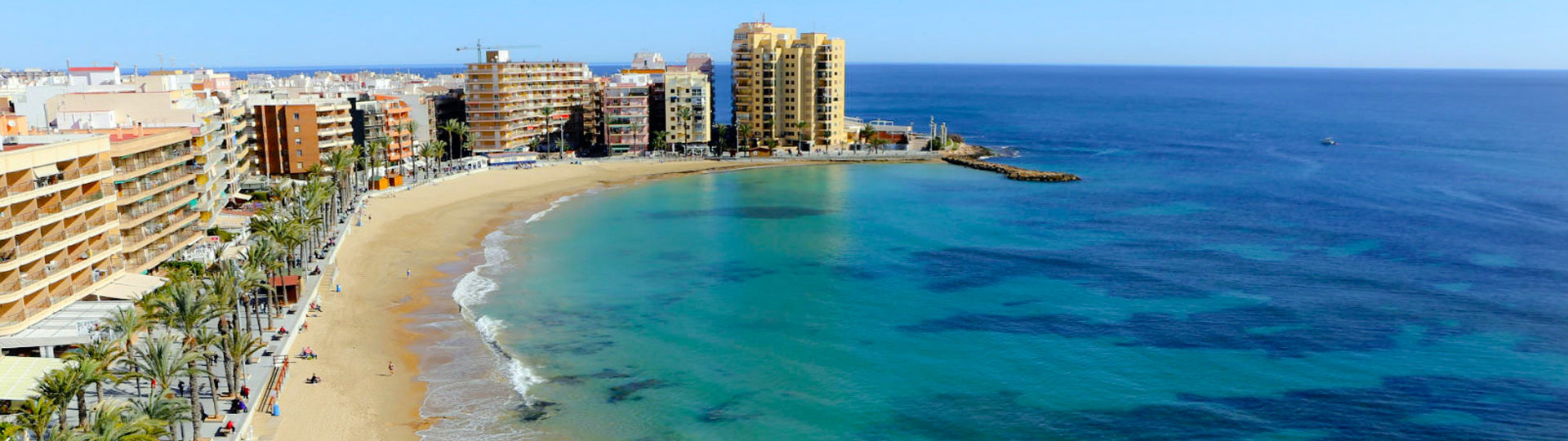
Towns like Guardamar, Torrevieja, La Marina, and the Orihuela Costa bustle with tourists year-round, and their amenities are perfectly suited to them. Numerous shopping centers, go-kart tracks, golf resorts, and amusement parks offer plenty of entertainment for all ages. Several towns boast a variety of Dutch and Belgian shops and restaurants, so you're never too far from home.
The average winter temperature is around 16ºC. In spring and autumn, the average temperature is around 20ºC. In summer, the average temperature is around 35ºC. When winter approaches, many Dutch people flock to the Costa Blanca, a popular destination for winter visitors. Life here continues 24/7 in summer; in the winter months, it's quieter, but there's still plenty to do. Outside of these cities, however, there's plenty to see. Think, for example, of Santa Barbara Castle or the picturesque mountain village of Guadalest. A jeep safari through the hinterland, a trip through the palm groves of Elche, or a visit to one of the spectacular nightclubs is also definitely worthwhile. All towns and villages have various shops for daily groceries (drugstore, bakery, tobacconist, and large supermarkets).
If you're looking for a real day trip, you can find plenty to do in cities like Alicante and Elche, both with their large shopping malls. Habaneras is located in Torrevieja, and La Zenia Boulevard is located in La Zenia, both very popular with shoppers. There are many festivals and traditional Spanish customs during the summer months, such as the numerous local fiestas, with and without parades, always ending with fireworks.
Costa Blanca North
The Costa Blanca North is located in the province of Alicante and stretches south from Denia to Alicante city. This coastline is considered by many to be one of the most beautiful in Spain and is characterized by a highly varied and picturesque landscape. Not only the expansive white sandy beaches, from which the Costa Blanca takes its name, but also impressive capes and cliffs with hidden coves nestled among pine forests make this area a highly exclusive region.
In the immediate hinterland, we find picturesque mountains and valleys largely covered in orange and almond orchards. These elevation changes create a wealth of real estate with stunning views.
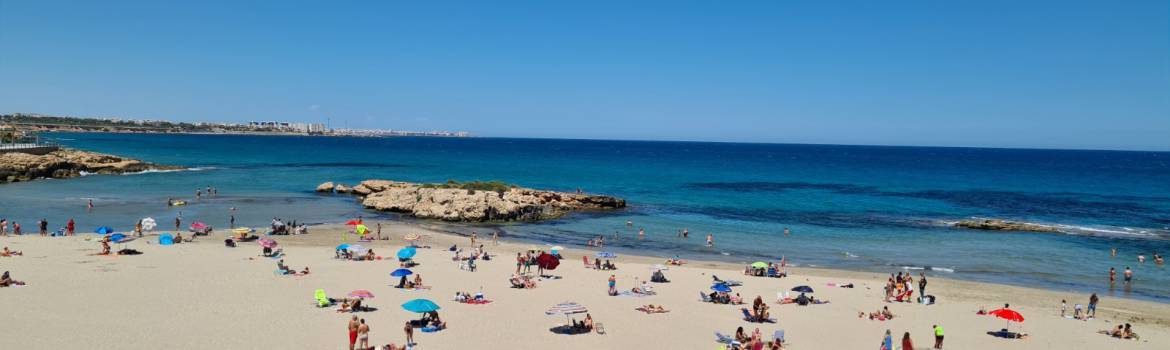
The main towns are Denia, Jávea, Moraira, and Altea. Along the coast, only apartment complexes with a maximum of four floors are permitted, with the exception of Calpe. Spacious residential neighborhoods are also found amidst the greenery. This gives the entire area a residential character, with many permanent residents and year-round businesses. Calpe is very popular with Belgians, partly due to its excellent gastronomy and beautiful boulevards. Mass tourism is therefore not found here, with the exception of Benidorm, which has long been one of Spain's most famous holiday destinations with its expansive promenades.
Theme park enthusiasts will also find plenty to enjoy here, thanks to the large number of them. Amusement parks, zoos, and water parks guarantee fun for the whole family. Water sports enthusiasts can also indulge themselves thanks to the breathtaking coastline, with several beaches and caves accessible only by water. Marinas are plentiful, with Denia being one of the most important, offering daily connections to Ibiza and Mallorca.
An advantage of this region is its easy accessibility via the airports of Valencia in the north and Alicante in the south. Most towns also have their own exit on the AP-7 motorway, making it quick and easy to get to. Furthermore, there are no large industries and the entire area enjoys a unique microclimate, making it one of the healthiest places in the world to live or stay.
- Temperature: The average winter temperature is around 16ºC. In spring and autumn, the average temperature is around 20ºC. In summer, the average temperature is around 35ºC.
- Time difference: There is no time difference with the Netherlands.
- Language: The official language is Spanish. However, you can get by almost everywhere with English and/or German, and sometimes even Dutch.
- Wintering: When winter approaches, many Dutch people flock to the Costa Blanca, a popular destination for winter visitors. Life here continues 24/7 in the summer; in the winter months, it's quieter, but there's still plenty to do. Outside of these cities, however, there's plenty to see. Think of Santa Barbara Castle, for example, or the picturesque mountain village of Guadalest. A jeep safari through the hinterland, a trip through Elche's palm grove, or a visit to one of the spectacular nightclubs is also definitely worth it.
- Shopping and Festivities: All towns and villages have a variety of shops for daily groceries (drugstores, bakeries, tobacconists, and large supermarkets). If you really want to make a day of it, you can find what you're looking for in cities like Alicante and Elche, which have large shopping centers. In Torrevieja, you'll find the Habaneras, a popular local favorite with shoppers. There are many festivals and traditional Spanish customs during the summer months. Local celebrations with and without parades, always ending with fireworks. Find out more about festivals and anniversaries in Spain here.
- Cities: The main towns in the north are Denia, Javea, Moraira, and Altea. Along the coast, only apartment complexes with a maximum of four floors are permitted, with the exception of Calpe. Spacious residential areas are also found amidst the greenery. In the south, Guardamar and Torrevieja are the medium-sized towns. Guardamar hosts a very large market on Wednesdays, where most locals do their daily shopping. Torrevieja is geared more towards tourists and boasts a large, lively boulevard with numerous shops and restaurants, as well as a large amusement park for all ages.
- Border formalities: A valid passport or identity card
- Webcam: Torrevieja





 Save and edit all your searches